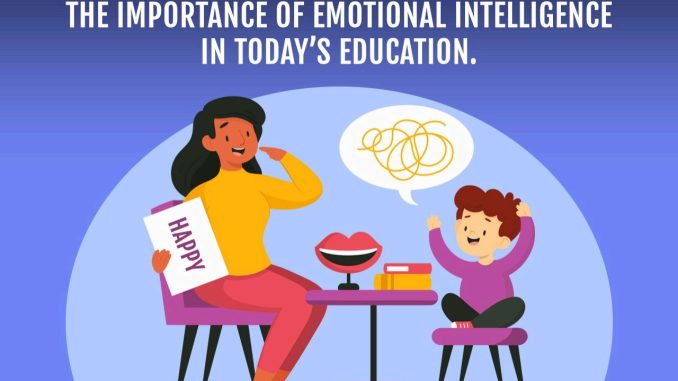
In the traditional pursuit of academic excellence, the spotlight has long shone on cognitive abilities: intelligence quotient (IQ), logical reasoning, mathematical prowess, and verbal fluency. Educational systems have historically prioritized the cultivation of these intellectual faculties, believing them to be the primary drivers of success in school and, subsequently, in life. However, a growing consensus among educators, psychologists, and even business leaders is challenging this narrow focus. They argue that alongside intellectual intelligence, another crucial set of skills—**emotional intelligence (EI)**—is equally, if not more, vital for navigating the complexities of modern life, fostering well-being, and achieving genuine, sustainable success. Integrating emotional intelligence into educational curricula is no longer a peripheral concern; it is a fundamental shift towards a more holistic and effective approach to preparing students for a world that demands far more than just academic knowledge.
At its core, emotional intelligence encompasses the ability to understand and manage one’s own emotions, as well as to perceive, understand, and influence the emotions of others. It involves self-awareness, self-regulation, motivation, empathy, and social skills. For students, cultivating these abilities directly impacts their academic journey. Consider, for instance, the power of **self-awareness**. A student who understands their own emotional responses to stress—perhaps during an exam or a challenging project—can then employ coping mechanisms. They might recognize the early signs of frustration and take a brief break, or identify anxiety and use breathing exercises, preventing emotional overwhelm from derailing their focus. Without this self-awareness, emotions can become disruptive forces, leading to procrastination, withdrawal, or impulsive behaviors that hinder learning.
Furthermore, **self-regulation**, the capacity to manage one’s impulses and emotions, is an indispensable skill for academic success. Students with strong self-regulation can defer gratification, resisting the urge to play video games in favor of studying, or staying calm and focused when faced with a difficult task. They learn to channel their frustration into productive effort rather than giving up. This ability to control emotional responses and adapt to changing circumstances is crucial for navigating the demanding academic environment, where resilience in the face of setbacks is often as important as raw intellect. When students can regulate their emotions, they are better able to concentrate, retain information, and perform consistently, even under pressure.
Beyond the individual, emotional intelligence profoundly impacts **social dynamics within the classroom and beyond**. Empathy, the ability to understand and share the feelings of another, fosters a more compassionate and inclusive learning environment. When students can empathize with their peers, they are more likely to engage in collaborative learning, resolve conflicts constructively, and build stronger relationships. This creates a supportive atmosphere where diversity is valued, and bullying is less likely to take root. Moreover, strong social skills—which involve effective communication, active listening, and the ability to work in teams—are essential for group projects, class discussions, and future professional collaborations. Schools are mini-societies, and teaching students to navigate these interpersonal landscapes with emotional intelligence prepares them for the complexities of the professional world, where teamwork and interpersonal dynamics often determine career trajectories.
The importance of emotional intelligence extends well beyond academic performance, directly impacting **overall well-being and future success**. Research consistently demonstrates a strong correlation between high emotional intelligence and positive mental health outcomes, including lower rates of anxiety and depression. Students equipped with EI are better able to cope with adversity, manage stress, and maintain a positive outlook, which are critical resilience factors in an increasingly complex world. In the professional sphere, numerous studies, particularly in business, highlight that emotional intelligence is often a stronger predictor of leadership effectiveness and career advancement than IQ alone. Employers increasingly seek individuals who can communicate effectively, collaborate seamlessly, resolve conflicts, and demonstrate empathy—all hallmarks of high EI. Thus, an education that cultivates emotional intelligence is not just about making better students; it’s about nurturing healthier, more adaptable, and ultimately more successful human beings.
Integrating emotional intelligence into education requires a conscious shift in pedagogical approaches. It involves more than just adding a standalone “social-emotional learning” class, though such programs are valuable. It necessitates weaving EI development into the very fabric of daily school life—through classroom discussions that encourage emotional literacy, collaborative projects that build social skills, restorative justice practices that teach conflict resolution, and mindfulness exercises that foster self-awareness. Educators themselves play a critical role, modeling emotionally intelligent behavior and providing opportunities for students to practice these skills. By recognizing the profound and multifaceted importance of emotional intelligence, educational institutions can move towards a more holistic model, one that prepares students not just with knowledge, but with the emotional acumen to thrive in a world that increasingly values character, compassion, and collaborative spirit alongside intellectual brilliance.