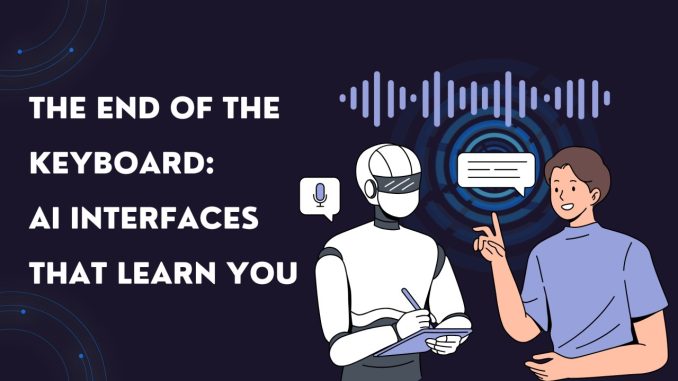
The way we interact with technology is undergoing a profound transformation, moving steadily beyond the traditional confines of keyboards and screens. Voice interface technologies are at the forefront of this shift, offering a more natural, intuitive, and accessible means of communication between humans and machines. As speech recognition and natural language processing continue to advance, voice is becoming not just a feature but a fundamental mode of interaction—reshaping everything from consumer behavior to enterprise workflows.
Voice interfaces tap into one of the most innate human abilities: speaking. Unlike typing or tapping, which require a certain level of dexterity and attention, speaking is fast, expressive, and often more efficient. This makes voice particularly appealing in contexts where hands-free operation is essential, such as driving, cooking, or managing tasks in a busy warehouse. Smart assistants like Amazon’s Alexa, Apple’s Siri, and Google Assistant have already familiarized millions of users with voice commands, setting the stage for broader adoption across devices and industries. What began as a novelty—asking a speaker to play music or set a timer—has evolved into a sophisticated ecosystem capable of managing calendars, controlling smart homes, and even conducting transactions.
In the business world, voice interfaces are beginning to unlock new efficiencies and opportunities. Customer service is one of the most visible areas of impact. Voice bots powered by AI can handle routine inquiries, route calls intelligently, and provide 24/7 support without the need for human intervention. This not only reduces operational costs but also improves response times and customer satisfaction. More advanced systems are capable of understanding context, detecting sentiment, and escalating complex issues to human agents when necessary. The result is a more seamless and responsive customer experience, where voice becomes a bridge rather than a barrier.
Voice is also making inroads into productivity tools and enterprise software. Imagine a sales executive updating a CRM system by simply speaking into their phone after a client meeting, or a project manager assigning tasks during a team huddle without needing to open a laptop. These scenarios are becoming increasingly feasible as voice recognition becomes more accurate and integrated into business applications. The convenience of voice input can reduce friction, speed up data entry, and allow professionals to focus more on strategic thinking and less on administrative tasks.
Accessibility is another powerful driver behind the rise of voice interfaces. For individuals with visual impairments, mobility challenges, or literacy barriers, voice technology can provide a more inclusive way to engage with digital content and services. By enabling users to navigate apps, search the web, or compose messages through speech, voice interfaces help bridge the digital divide. This inclusivity is not just a social good—it’s a business imperative, as companies seek to reach broader audiences and comply with accessibility standards.
However, the adoption of voice technology is not without its challenges. Privacy and security remain top concerns, particularly when devices are always listening for wake words or processing sensitive information. Users need assurance that their data is being handled responsibly, and developers must design systems that balance convenience with control. This includes features like local processing, opt-in settings, and transparent data policies. Trust is essential for voice interfaces to become truly mainstream, especially in sectors like healthcare, finance, and legal services where confidentiality is paramount.
Another hurdle is the complexity of natural language itself. Unlike typed commands, spoken language is full of nuance, ambiguity, and variation. Accents, dialects, background noise, and colloquialisms can all affect recognition accuracy. While machine learning models have made impressive strides, achieving human-level understanding remains a work in progress. Developers must continuously train and refine their systems to handle diverse speech patterns and contexts. This requires not only technical expertise but also cultural sensitivity and user feedback.
Despite these challenges, the momentum behind voice interface technologies is undeniable. As hardware becomes more capable and software more intelligent, voice is poised to become a central component of the digital experience. Businesses that embrace this shift early can differentiate themselves through more engaging, efficient, and accessible interactions. Whether it’s enabling voice search on an e-commerce site, integrating voice commands into enterprise tools, or developing custom voice applications for specific use cases, the possibilities are vast.
The future of voice interfaces will likely involve deeper integration with other modalities, such as gesture, facial recognition, and contextual awareness. This multimodal approach can create richer, more adaptive experiences that respond to users in real time. For instance, a smart assistant might combine voice input with visual cues from a camera to better understand intent, or use location data to tailor responses. These advancements will further blur the line between human and machine interaction, making technology feel more like a collaborator than a tool.
Ultimately, moving beyond the keyboard is about reimagining how we connect with technology. Voice interface technologies offer a glimpse into a more fluid, human-centered digital world—one where speaking to a device feels as natural as speaking to a colleague. As businesses explore this frontier, success will depend not just on technical execution but on empathy, design, and a deep understanding of user needs. In doing so, they can create experiences that are not only more efficient but also more personal, inclusive, and engaging.