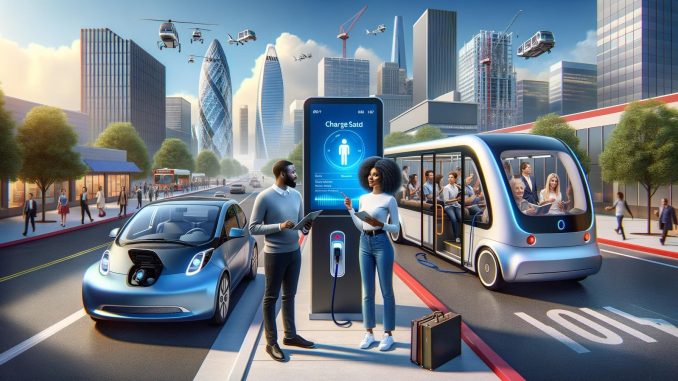
The arteries of modern commerce and daily life are increasingly flowing with the lifeblood of technology. Transportation, a sector long characterized by its reliance on physical infrastructure and human labor, is undergoing a profound transformation. From the bustling streets of mega-cities to the vast stretches of global supply chains, technological advancements are making the movement of people and goods remarkably more efficient, safer, and environmentally friendly. This shift is not merely incremental; it is a fundamental re-imagining of how we navigate our world, driven by connectivity, data analytics, and autonomous capabilities.
One of the most immediate and visible impacts of technology on transportation efficiency can be observed in traffic management systems. Artificial Intelligence (AI) and the Internet of Things (IoT) are at the forefront of this revolution. Smart traffic lights, powered by AI algorithms, no longer operate on rigid, pre-programmed timers. Instead, they dynamically adjust signal timings in real-time based on live traffic conditions, data collected from sensors embedded in roads, traffic cameras, and even GPS data from connected vehicles. This adaptive control minimizes idling time at intersections, reduces congestion, and optimizes traffic flow across entire urban grids. Cities like Pittsburgh have reported significant reductions in travel times and vehicle emissions, demonstrating the tangible benefits of these intelligent systems. Furthermore, AI-driven predictive analytics can forecast congestion hotspots, allowing authorities to reroute traffic proactively and issue real-time advisories to drivers through navigation apps, preventing bottlenecks before they fully materialize.
The realm of logistics and freight transportation has also been profoundly reshaped by technology, leading to unprecedented levels of efficiency. IoT sensors are now ubiquitous, tracking everything from the precise location of a shipment to its temperature, humidity, and even vibration levels during transit. This real-time visibility provides logistics companies with unparalleled control and insights into their supply chains. AI-powered route optimization software utilizes this data, along with historical traffic patterns, weather forecasts, and delivery schedules, to calculate the most efficient routes, minimizing fuel consumption and reducing delivery times. Predictive maintenance, enabled by IoT sensors on vehicles, monitors engine health, tire pressure, and other critical components, flagging potential mechanical issues before they lead to costly breakdowns and unplanned downtime. This proactive approach significantly enhances fleet uptime and reduces operational expenses, ensuring goods reach their destinations reliably and efficiently.
Perhaps the most transformative, yet still evolving, aspect of technological advancement in transportation is the rise of autonomous vehicles (AVs). While fully self-driving cars for public roads are still some years away from widespread adoption, autonomous capabilities are already enhancing efficiency in controlled environments and specific applications. Autonomous trucks, for instance, can operate for longer hours without fatigue-related breaks, optimize acceleration and braking to conserve fuel, and potentially drive in closer platoons to reduce aerodynamic drag. This not only lowers operational costs by minimizing human intervention but also improves fuel efficiency and reduces emissions. In warehouses and ports, autonomous guided vehicles (AGVs) and drones are automating the movement of goods, dramatically speeding up sorting, packing, and loading processes, and reducing human error. The long-term vision of AVs communicating with each other and with smart infrastructure (V2X communication) promises a future where traffic flows seamlessly, accidents are drastically reduced, and road capacity is utilized with unprecedented efficiency.
Public transportation, the backbone of urban mobility, is also experiencing a technological renaissance aimed at greater efficiency and user experience. Real-time tracking of buses and trains via GPS allows passengers to access accurate arrival predictions through mobile apps, reducing frustrating wait times and enabling better trip planning. AI-powered systems are optimizing bus and train schedules based on real-time passenger demand and traffic conditions, ensuring that service frequency aligns precisely with needs, reducing both overcrowding and wasted resources. Smart ticketing systems, incorporating contactless payments and mobile apps, streamline the boarding process, minimizing delays at stops. Furthermore, the push towards electric and eventually autonomous public transit vehicles promises cleaner air, quieter cities, and significantly lower operating costs over time, contributing to overall urban sustainability and efficiency.
Beyond individual vehicle or system improvements, the concept of “smart cities” is bringing together disparate technologies to create an integrated, hyper-efficient transportation ecosystem. This involves a comprehensive network of sensors, data analytics platforms, and AI that monitor everything from parking availability to pedestrian flow. Mobility-as-a-Service (MaaS) platforms integrate various transport options—public transit, ride-sharing, bike-sharing, and even micro-mobility solutions—into a single, user-friendly application, allowing individuals to plan and pay for multimodal journeys with seamless efficiency. This encourages greater utilization of public and shared transport options, reducing the number of private vehicles on the road, alleviating congestion, and contributing to a more sustainable urban environment.
Of course, the journey towards fully optimized, technologically advanced transportation is not without its challenges. Issues of data privacy, cybersecurity, the ethical implications of AI-driven decisions, and the need for significant infrastructure investment all require careful consideration. However, the trajectory is clear: technology is the driving force behind a more efficient, safer, and more sustainable future for transportation. By continually innovating and integrating these advanced capabilities, we are moving towards a world where getting from point A to point B, whether for people or products, is faster, smarter, and more seamless than ever before.