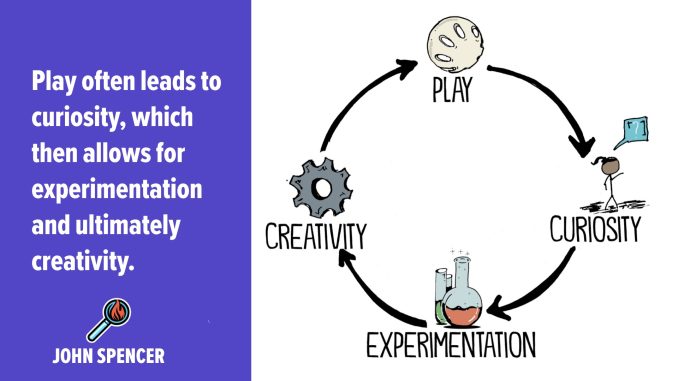
Curiosity is often described as the spark behind innovation, but in the context of studying, it’s more than a spark—it’s a fuel source. When students learn to harness curiosity as a study tool, they shift from passive absorption to active exploration. The process becomes less about memorizing facts and more about uncovering meaning. Curiosity transforms study sessions from obligations into opportunities, inviting learners to ask better questions, dig deeper into concepts, and connect ideas across disciplines. It’s not just a mindset—it’s a strategy that can elevate both engagement and retention.
At its core, curiosity is the desire to know more. It’s the internal nudge that asks, “Why does this work?” or “What happens if I change this variable?” When students approach material with genuine interest, they’re more likely to engage with it critically. For example, a student studying economics might wonder why certain policies succeed in one country but fail in another. That question leads them beyond the textbook, into case studies, historical context, and comparative analysis. The curiosity-driven learner doesn’t just accept information—they interrogate it, and in doing so, they build a richer understanding.
Using curiosity as a study tool also means reframing how we approach unfamiliar or difficult topics. Instead of seeing complexity as a barrier, curious learners treat it as a puzzle. They lean into confusion with the belief that there’s something worth discovering on the other side. This mindset fosters resilience. A student struggling with organic chemistry might start asking how molecular structures influence real-world applications, such as pharmaceuticals or environmental science. That shift in perspective makes the material more relevant and less intimidating. Curiosity turns challenge into intrigue, which is a far more sustainable source of motivation.
One of the most practical ways to activate curiosity is through questioning. Not just the questions posed by instructors, but the ones students generate themselves. What assumptions underlie this theory? How does this concept apply outside the classroom? What are the exceptions to this rule? These kinds of questions deepen engagement and guide more targeted study. They also encourage learners to seek multiple sources, compare viewpoints, and synthesize information. A business student exploring leadership models might ask why certain styles thrive in startups but falter in large corporations. That inquiry leads to a nuanced understanding that goes beyond surface-level definitions.
Curiosity also enhances memory. When learners are genuinely interested in a topic, they’re more likely to remember it. This is because curiosity activates the brain’s reward system, making the learning experience more emotionally resonant. A student fascinated by space exploration will likely retain details about planetary systems more easily than someone studying the same material out of obligation. The emotional engagement that curiosity brings helps encode information more deeply, making recall more reliable and long-lasting.
In collaborative settings, curiosity can be contagious. When one student asks a compelling question or shares an unexpected insight, it often prompts others to think differently. Study groups that encourage open-ended discussion and exploration tend to be more dynamic and effective. They move beyond rote review and into meaningful dialogue. A team of MBA candidates preparing for a case competition might challenge each other with “what if” scenarios, exploring alternative strategies and outcomes. This kind of curiosity-driven collaboration not only improves understanding but also builds critical thinking and communication skills.
Technology can amplify curiosity when used intentionally. Online platforms, simulations, and interactive tools offer opportunities to explore concepts in new ways. But the key is to use these resources not just for convenience, but for discovery. A student learning coding might experiment with building a simple app, driven by the question, “Can I make something that solves a real problem?” That curiosity leads them to troubleshoot, iterate, and learn through doing. The process becomes a self-directed journey, guided by interest rather than instruction alone.
Importantly, curiosity must be nurtured. In environments that prioritize grades over growth, students may suppress their natural inquisitiveness in favor of compliance. But when educators and institutions encourage exploration, reward thoughtful questions, and create space for intellectual risk-taking, curiosity flourishes. Students begin to see learning not as a checklist, but as a landscape to explore. They become more autonomous, more engaged, and more invested in their own development.
Curiosity also bridges disciplines. It encourages learners to make connections between seemingly unrelated subjects, leading to interdisciplinary insights. A student studying psychology might become curious about how behavioral principles apply to marketing. That curiosity opens up a new dimension of understanding, enriching both fields. These cross-disciplinary connections are especially valuable in business, where complex problems often require diverse perspectives and creative solutions.
Ultimately, using curiosity as a study tool is about reclaiming the joy of learning. It’s about shifting from passive consumption to active inquiry, from obligation to fascination. When students learn to follow their questions, challenge their assumptions, and explore the unknown, they don’t just perform better—they think better. They become learners who are not only informed but inspired. And in a world that rewards adaptability, insight, and innovation, that kind of learning is not just advantageous—it’s essential.