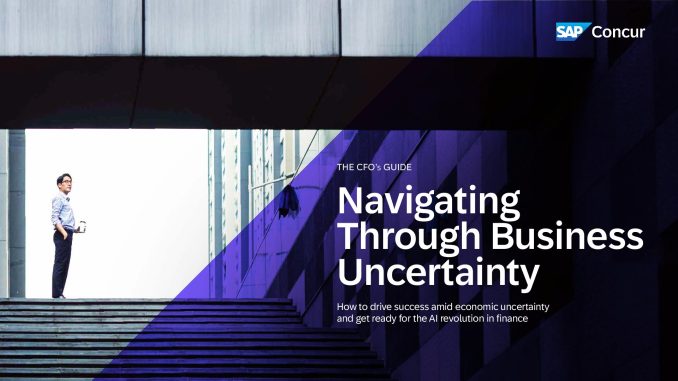
Uncertainty is not a detour in business—it’s part of the terrain. Whether it’s economic volatility, technological disruption, shifting consumer behavior, or geopolitical tension, the path forward is rarely linear. Yet the ability to navigate uncertainty is what separates resilient businesses from reactive ones. It’s not about eliminating unpredictability but learning to operate within it. That requires a blend of strategic foresight, operational flexibility, and emotional steadiness. In times of flux, businesses must become more than efficient—they must become adaptive.
The first step in navigating uncertainty is accepting it as a constant rather than a temporary inconvenience. Many organizations fall into the trap of waiting for stability to return before making decisions. But in doing so, they risk stagnation. The reality is that uncertainty often reveals itself in waves, and waiting for calm can mean missing critical opportunities. Businesses that thrive in uncertain environments are those that build decision-making processes designed for ambiguity. They don’t rely solely on fixed plans—they create frameworks that allow for iteration, learning, and recalibration.
Scenario planning is one such framework. It’s not about predicting the future but preparing for multiple plausible outcomes. By exploring different scenarios—optimistic, pessimistic, and somewhere in between—leaders can stress-test their strategies and identify vulnerabilities. This kind of thinking encourages agility. It prompts organizations to ask, “What would we do if…?” and to build contingency plans that can be activated quickly. It also fosters a mindset of readiness rather than reaction. When teams are mentally prepared for change, they respond with more confidence and less panic.
Communication becomes especially critical during uncertain times. Employees, customers, and partners look to leadership for clarity, even when answers are incomplete. Transparency builds trust. It’s better to acknowledge what’s unknown than to pretend certainty. Leaders who communicate openly—sharing what they know, what they’re considering, and how they’re making decisions—create a sense of inclusion. That inclusion helps people stay engaged and aligned, even when the path ahead is unclear. It also reinforces the idea that uncertainty is a shared experience, not a burden carried by a few.
Culture plays a quiet but powerful role in navigating uncertainty. Organizations with strong cultures tend to weather disruption more effectively because they have a foundation of shared values and behaviors. When people know what the company stands for, they can make decisions that reflect those principles, even in unfamiliar situations. A culture that encourages experimentation, tolerates failure, and rewards learning creates psychological safety. That safety is essential when trying new approaches or pivoting quickly. It allows teams to move forward without fear of blame, which is crucial when the stakes are high and the outcomes are unknown.
Financial discipline is another anchor in uncertain times. While growth is often the focus during stable periods, resilience becomes the priority when conditions shift. Businesses must manage cash flow carefully, reassess investments, and ensure that resources are allocated to areas with the highest strategic value. This doesn’t mean cutting indiscriminately—it means being intentional. It’s about balancing short-term survival with long-term positioning. Companies that maintain financial flexibility can seize opportunities when others are constrained. They can invest in innovation, talent, or market expansion precisely when competitors are pulling back.
Technology can be both a source of uncertainty and a tool for navigating it. Rapid advances in AI, automation, and digital platforms are reshaping industries, often faster than businesses can adapt. But those same technologies can also provide insight, efficiency, and scalability. Data analytics, for example, can help leaders spot emerging trends, monitor performance in real time, and make informed decisions. Digital collaboration tools can keep teams connected and productive, even in dispersed or disrupted environments. The key is to use technology not just to automate but to augment decision-making and resilience.
Customer relationships also require special attention during uncertain periods. Expectations shift, priorities change, and loyalty can be tested. Businesses must listen more closely, respond more quickly, and deliver more value. That might mean adjusting offerings, rethinking pricing, or enhancing service. It’s not about being reactive—it’s about being responsive. When customers feel understood and supported, they’re more likely to stay engaged. And that engagement becomes a stabilizing force. It provides feedback, revenue, and advocacy—all of which are invaluable when navigating uncertainty.
Leadership, ultimately, is the compass. In times of uncertainty, people look for direction, not just decisions. They want to know that someone is thinking ahead, weighing options, and caring about outcomes. Effective leaders don’t pretend to have all the answers. They ask good questions, seek diverse perspectives, and make choices grounded in values. They balance optimism with realism, and decisiveness with humility. Their presence becomes a source of steadiness, even when the environment is anything but.
Navigating uncertainty is not a one-time challenge—it’s a continuous discipline. It requires businesses to build systems, cultures, and mindsets that are designed for change. It’s about being prepared, not just for what’s likely, but for what’s possible. And it’s about recognizing that uncertainty, while uncomfortable, is also fertile ground for innovation, growth, and transformation. When businesses embrace that reality, they don’t just survive—they evolve. They become more resilient, more relevant, and more capable of shaping the future rather than being shaped by it.